
Is this tree sick, stressed or dangerous?
Tree Health Assessments in Lubbock, TX
An on-site look at a tree that worries you, and a straight answer about pruning, care or removal.
- Free visits to quote jobs throughout Lubbock and the South Plains
- You get the price in writing, tree by tree
- We agree on haul-off before day one
Finding Out Why a Tree Looks Wrong
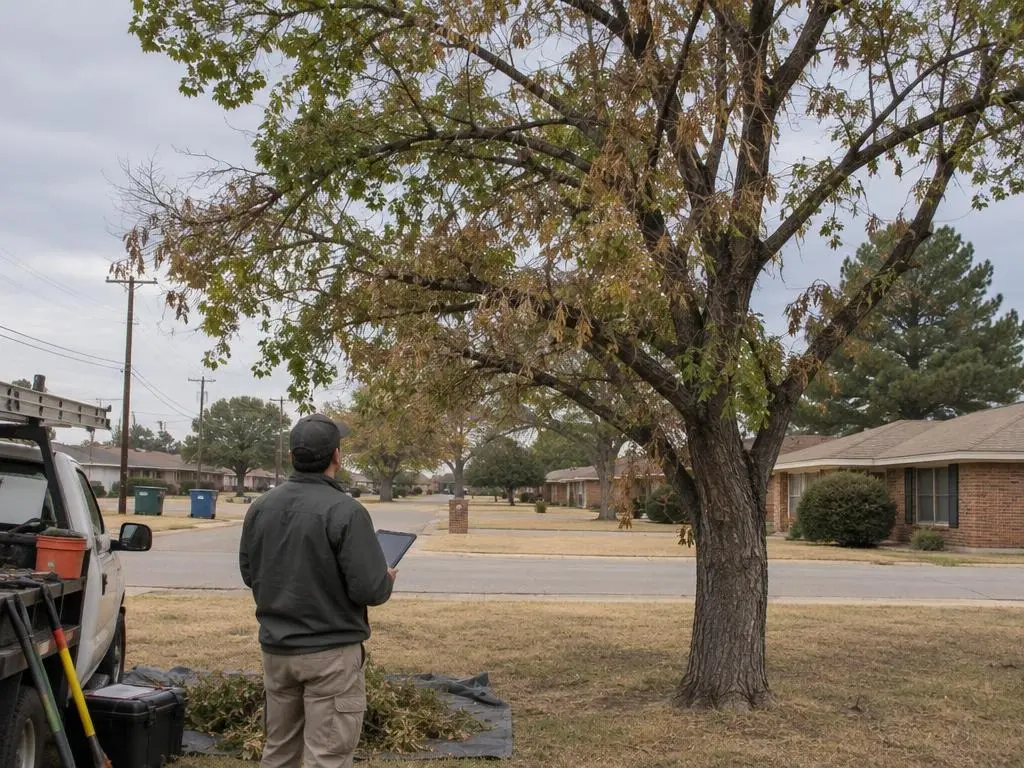
Tree health assessments in Lubbock start with a simple question: is this tree going to get better, stay the same, or come down on something? Trees here live under steady stress from heat, wind, low rainfall and alkaline soil, so a thin canopy or brown leaves can come from many causes. We look at the whole tree, from the soil at the base to the top of the crown, and explain what we see in plain terms. Then we tell you which of the realistic options, pruning, better watering, waiting, or removal, makes sense.
Elm leaf beetle
If your elm turns rusty brown and lacy by midsummer, elm leaf beetle is the first suspect. Texas A&M AgriLife in Lubbock County says the beetle has three or more generations a year on the South Plains. Adults chew holes in new leaves in spring, and the black, slug-like larvae skeletonize the leaf tissue. One bad year is mostly cosmetic, but severe infestations several years running can kill limbs or the whole tree. AgriLife recommends checking new leaves for eggs and young larvae starting in April, which is the window when control is most effective. The beetle does not spread Dutch elm disease.
Texas root rot
This soil fungus thrives in alkaline, calcareous soils with a pH of about 7 to 8.5, which describes much of the South Plains, and it attacks almost 2,000 broadleaf species, including pecans and many ornamental trees. Symptoms show in the heat of mid to late summer: leaves yellow, then brown and wilt, and the plant can die about two weeks after the first signs. Infected roots carry cinnamon-colored fungal strands. There is no simple cure for a tree that is already wilting, so the assessment focuses on safety and on what to plant afterward.
Drought, heat and freeze
Lubbock averages about 18 inches of rain a year and more than 90 afternoons at 90 degrees or hotter. Trees that are watered only by a lawn sprinkler often have shallow roots and scorched leaf edges by August. Hard cold snaps add another layer; in January 2026 Lubbock stayed below freezing for more than 95 hours and hit a record low of 2 below zero. Freeze injury often shows up the next spring as branches that never leaf out. We look for the line between live and dead wood and tell you how much of the tree is likely to recover.
Structure and storm risk
A healthy-looking tree can still be a hazard. We check for narrow forks with included bark, old cracks, decay in the trunk or at old pruning wounds, roots cut by a driveway or sewer job, and a lean that has changed recently. On the South Plains, where roots often spread sideways above a caliche layer instead of going deep, the root zone matters as much as the trunk. If a tree over a house, a play area or the alley has serious defects, we tell you directly.
Soil and planting
Soil in Lubbock County tends toward alkaline, with a calcium carbonate layer starting a few feet down. If a tree's problems seem to come from the soil, Texas A&M's soil testing lab accepts urban soil samples from homeowners, and the results tell you what you are working with. When a tree has to be replaced, the Lubbock Master Gardeners' list of water-wise trees for Lubbock County, including cedar elm, lacebark elm, bur oak, chinquapin oak, Chinese pistache and Afghan pine, is a solid place to start.
What an Assessment Looks At
Each visit covers the tree, its roots and what it could hit.
Canopy and leaves
Thinning, dieback, leaf scorch, chewing damage and off-color foliage that point to pests, drought or root trouble.
Trunk and forks
Cracks, cavities, included bark, fungal growth and old wounds that weaken the tree's structure.
Root zone
Soil heave, girdling roots, cut roots, sudden lean and signs of root rot at the base.
Targets
What the tree or its limbs could hit: roof, fence, cars, the alley, lines and places people gather.
A written summary
What we found, how urgent it is, and the options with a price for any work recommended.
Typical Tree Assessment and Care Costs
| Service | Published range |
|---|---|
| Inspection or risk assessment (HomeGuide) | $100 to $250 |
| Written report, per tree (HomeGuide) | $150 to $450 |
| Tree injection treatment, per tree (HomeGuide) | $75 to $250 |
| Deep root fertilization, per tree (HomeGuide) | $60 to $200 |
| Cabling, per tree (HomeGuide) | $200 to $350 |
National ranges from HomeGuide's 2026 arborist cost guide. Pesticide treatments for hire in Texas are regulated by the Texas Department of Agriculture. We look at the tree and tell you what we find at no cost when you are getting an estimate for tree work. Your written estimate is the price.
How an Assessment Goes
1. Tell us the history
When the problem started, how the tree is watered, any recent construction, storms or chemical use nearby.
2. Inspect the tree
Crown, leaves, trunk, forks and root zone checked from the ground and, where needed, up close.
3. Explain the findings
What is likely going on, how serious it is and how quickly it needs attention.
4. Lay out options
Pruning, watering changes, waiting, treatment by a licensed applicator, or removal, with written prices for any work.
Why Choose Us for Tree Health Assessments
Honest about removal
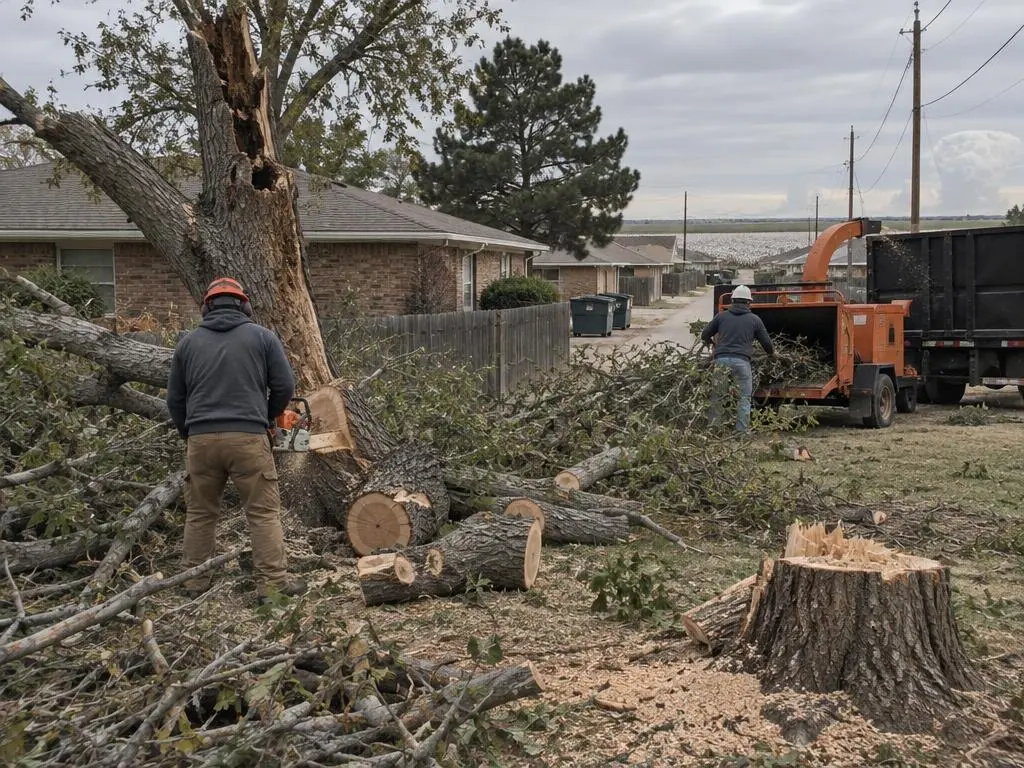
If a tree can be kept with pruning or better care, we say so, even though removal is a bigger job.
Local problems first
We look for the issues that are common on the South Plains: elm leaf beetle, root rot, drought and freeze stress.
Tree Health Assessments Questions
Why did my tree die so suddenly in the summer?
On alkaline South Plains soil, Texas root rot is one common cause: leaves yellow and wilt in mid to late summer and the tree can die in about two weeks. Severe drought stress and root damage from digging can look similar. We look at the roots and base to tell them apart.
Is the brown, lacy damage on my elm going to kill it?
One season of elm leaf beetle damage usually will not, but AgriLife notes that severe infestations several years in a row can kill limbs or the tree. Watch new leaves in April for eggs and young larvae, which is when control works best.
Why are my tree's leaves yellow with green veins?
That pattern often points to a nutrient the tree cannot take up well in high-pH soil, such as iron, which is common in alkaline soils like Lubbock's. A soil test through Texas A&M can confirm the soil pH and nutrient levels before anything is added.
Can you tell me if my tree is safe to keep near the house?
We can tell you what defects we see, such as cracks, decay, weak forks or root problems, how likely they are to fail, and what they would hit if they did. Then you can decide whether pruning, cabling or removal makes sense.
Tree Health Assessments Service Areas
- Tree Service in Lubbock, TX
- Tree Service in Wolfforth, TX
- Tree Service in Shallowater, TX
- Tree Service in Idalou, TX
- Tree Service in Slaton, TX
- Tree Service in Ransom Canyon, TX
- Tree Service in Buffalo Springs, TX
- Tree Service in Abernathy, TX
- Tree Service in New Deal, TX
- Tree Service in Lorenzo, TX
- Tree Service in Ralls, TX
- Tree Service in Levelland, TX
- Tree Service in Tahoka, TX
- Tree Service in Wilson, TX
- Tree Service in Smyer, TX
- Tree Service in Ropesville, TX
- Tree Service in Anton, TX
- Tree Service in Woodrow, TX
- Tree Service in Reese Center, TX
- Tree Service in New Home, TX
- Tree Service in Petersburg, TX
Get a Tree Health Assessments Estimate
Worried about a tree in Lubbock? Get a free look at it.